Circularity from a single source
Raw materials are finite. This realisation is no longer new, but its consequences constantly demand sustainable solutions from manufacturers. Mechanical manufacturing is constantly looking for new ways to harmonise productivity with energy efficiency and resource conservation, without compromising on quality. This also applies to the recycling of solid carbide tools used in mechanical production. Walter is already a pioneer in this area and is constantly scrutinising its own processes. To this end, the manufacturer of cutting tools from Tübingen works closely with the leading powder manufacturer, Wolfram Bergbau and Hütten AG from Austria. This allows the Tübingen machining expert to ensure that tools are retained in their own cycle.
From development to recycling
From the very beginning, Walter's approach to sustainability focuses on ensuring that raw materials are used in a resource-conserving manner by considering the recycling of tools right from the development and manufacturing process. This means that the company takes the entire life cycle of the tools into account right from the start.
However, before they are recycled, Walter reconditions the previously used solid carbide tools, so that customers can use them multiple times. This involves reconditioning the tools by regrinding, applying new coatings and applying other measures to make them fit for use again. This can increase the efficiency of a tool many times over. This saves acquisition costs and reduces the use of rare resources.
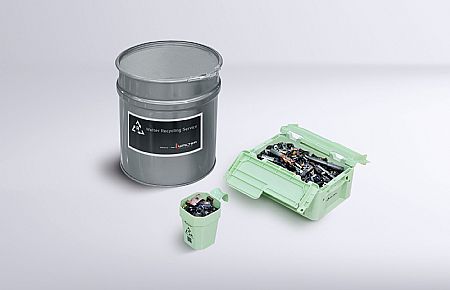
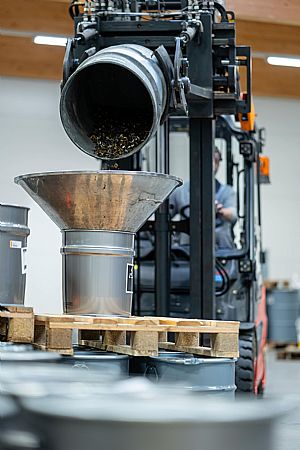
At some point, however, even the most robust tool reaches the end of its life cycle. When a tool no longer achieves the desired tool life and no longer delivers the usual quality, recycling is the next step. Walter customers can obtain a quote for used tools online via the recycling portal, order free recycling containers and have the tools collected easily and free of charge. This ensures that used tools are channelled exclusively into the manufacture of new tools and are not used for other purposes.
Complete recycling
The next step involves the powder manufacturer Wolfram Bergbau and Hütten AG in Austria. Wolfram is a world leader in the production of tungsten carbide powder of the highest quality. The company has also developed a chemical recycling process with which a high-purity intermediate product can be recovered from used carbide tools and recycled to manufacture new tools.
Tungsten recycling has a long history dating back to the 1940s, when the first industrially used recovery technologies were discovered. Since then, a variety of tungsten carbide recycling technologies have been developed. They can be categorised into three main groups: direct recycling, chemical recycling, and smelting metallurgy.
No loss of quality thanks to chemical recycling
Wolfram Bergbau and Hütten AG primarily favours the chemical process, also known as indirect recycling. In this process, the delivered material is converted into powder of the same composition through physical and chemical processes. The result of this recycling process is a high-purity, metal-containing salt called ammonium paratungstate (APW), the most important intermediate product for the production of tungsten carbide. The quality of the APW obtained from recycled material is therefore crucial for the recycling cycle. At the end, it should have the same purity and physical properties as APW obtained from primary raw materials (ore concentrate). This is the case here.
The intermediate product is then used in powder metallurgy processes such as calcination, hydrogen reduction, and carburisation to produce the finished tungsten carbide powder, from which new solid carbide tools can be manufactured. These tools can also be recycled at the end of their life cycle. For the recycling process, it does not matter how high the recycled content is, as the tools can always break down into their chemical components again.
Two-thirds less CO2
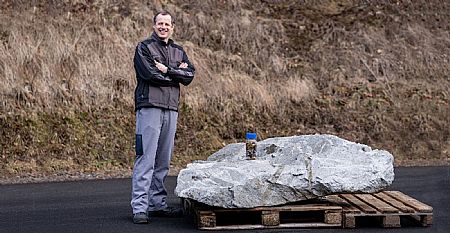
Despite the complex recycling process, the energy consumption is lower than when recycling materials from primary raw materials (ore concentrates). This is because the complex extraction process is energy-intensive and requires high temperatures and strong chemicals to dissolve the bonds in the mineral. This means that more energy is used on raw tungsten ore concentrate than is required to produce tools from recycled materials. In addition, the tungsten content in the raw ore is 250 times lower than in the same amount of solid carbide.
In short, the recycling process avoids natural resource consumption and reduces the CO2 footprint used in tungsten carbide production by over 40%. Annegret Bicherl, Vice President of Operations at Wolfram, confirms: "The recycling process requires less energy and has a lower CO2 footprint than production from raw materials. Recycling is therefore clearly the future. By optimising the value-added cycle, we ensure sustainable energy efficiency and waste reduction."
Quality is the decisive factor
In the machining process, tools are subjected to demanding and intensive use. This results in unavoidable material loss, but Walter can use carbide powder to produce indexable inserts that contain up to 60% recycled raw material.
In the end, however, the decisive factor is, of course, quality. The cutting tool materials are tested intensively before being used in production. This is the test for tungsten carbide made from recycled solid carbide. "It is crucial for us that the cutting tool materials are of impeccable quality," explains Stefan Rudolph, Head of Product Development at Walter. "We don't even ask what percentage of the solid carbide powder comes from recycled material, and we don't see any indication of this." And the machinist at the machine who clamps the new Walter tool does not notice anything either. That is how it should be.